
Diseñar y Hacer Objetos para Mejorar la Sociedad
The Bauhaus was a school founded in 1919 in Germany by Walter Gropius, in which different disciplines such as architecture, design, crafts and art coexisted. This was precisely the basis of its success, since the dialogue between different arts and knowledge together with an openness to experimentation, led to the enrichment of the projects and works that were carried out and whose influence lasts until today. It was intended that the art could transform society after the disaster of World War I. In 1933 it closed due to the arrival of the Nazis and moved to the US, where its ideas spread. The school is a way of having a new vision of society that can transform it, to have a better world.
“Shape follows function”, each object will be designed for a purpose that serves for something in society that is useful. This is a concept that is used today in design as well but it was conceptualized at the Bauhaus. Everything is based on production and on the relationship between art and crafts, that is, between the idea and the actual execution of it taking into account that the objects created were accessible to the general public, not just for a few.
Many well-known personalities from history such as Kandinsky, Mies van der Rohe or Paul Klee passed through the Bauhaus. The personal involvement in the project was great as it was sought that what was done had a real impact. They also experimented with new teamwork ways
The Bauhaus was the most influential school of the 20th century. It unites the artistic with the production. Break down the barriers between the different disciplines to generate a total dialogue between the arts. The classes were practical, it was full of activities and life. The students felt very free to create what they wanted.
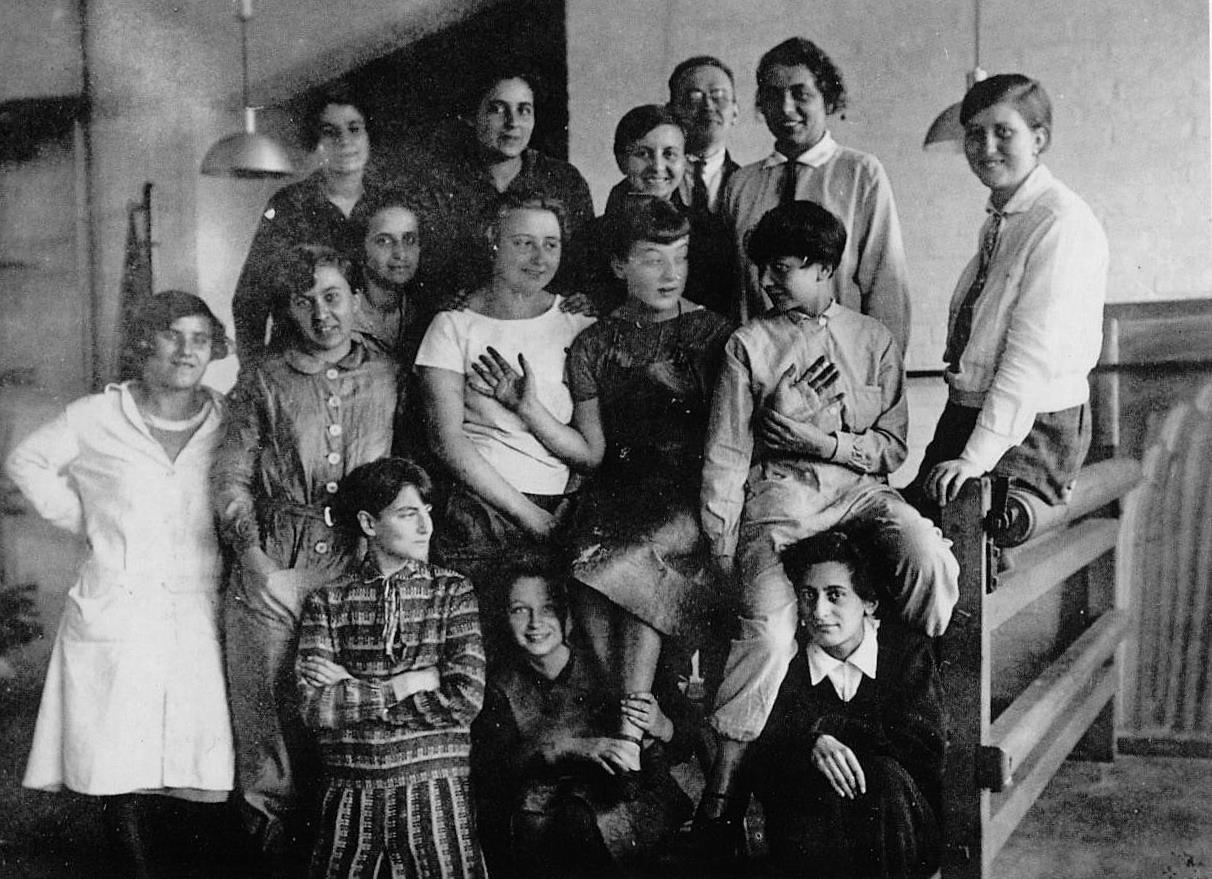
However, at the beginning, women were entrusted with tasks with which they were more related, such as looms or ceramics, but some of them, such as Lilly Reich, Anni Albers, Marianne Brandt or Alma Siedhoff-Buscher, did not only focus in these activities and they also experimented in the realization of other utensils.
At the school, an exclusively toy shop was created where Bauhaus values were applied to the area of children’s games
An example of a playful as well as didactic element was the Ludwig Hirschfelt-Mack color mixer that with a spinning top showed how colors were mixed with movement. With interchangeable discs, it taught various aspects of color theory.
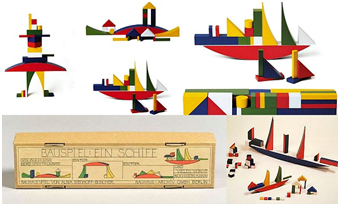
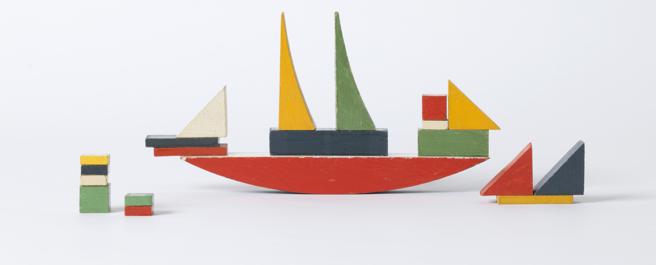
But in the workshop Alma Siedhoff-Buscher highlighted as she took children very into account in her creations. She made children’s furniture and was the designer of a famous construction game made up of wooden pieces in primary colors (that today we still recognize as contemporary) with which many different shapes can be made while the child develops his imagination, the ability to concentrate and his geometric and spatial vision.
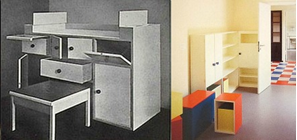
She also designed the nursery for a model home in 1923, introducing something as modern as washable walls that were used for painting, furniture was also transformed into games. She was deeply influenced by the “kinder gardens” inspired by the pedagogical ideas of Friedrich Fröebel who gave importance to play as an element of child development and necessary learning. Today there are also movements that defend these same ideas such as Waldorf pedagogy, which argues that play is a necessary experience to learn and develop intellectual capacities.
We owe a lot to all these creators who have influenced us so much, who showed us the necessary steps to go from the idea to the execution, who taught us to create real and practical elements that improve society and the lives of humans and they did all of this at very difficult moments in history.





0 Comments